

Hollow Wood Surfboards
Making a comeback all over the world!
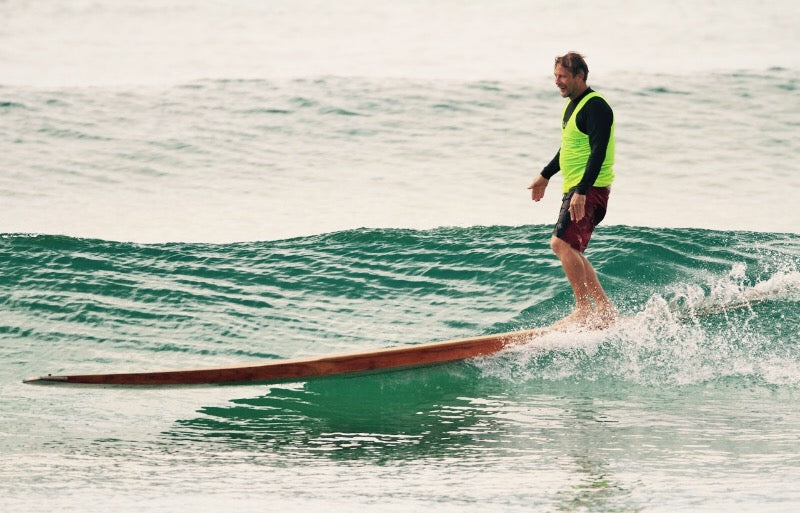
By 1999 I had moved to Noosa Heads permanently, and Margie and I were living at Sunshine Beach. I was working in a local PU based surfboard factory. I had first met Paul Joske from Valla Surfboards when I arrived in Australia and was touring the surf film Siestas and Olas. Later he was visiting Noosa and he brought a hollow longboard made from paulownia wood. I believe it was the first hollow paulownia surfboard made in the modern surfing world. It felt heavy on the land but in the water it was light and alive. I was transformed back to my balsa experiences from years before.
Paul had been hired to make this board by the Australian paulownia industry. The paulownia growers were looking for markets for their wood as it was essentially unheard of in Australia, Europe and the USA at the time.
After Paul’s introduction to paulownia, I started by putting one and two inch thick paulownia stringers into my PU boards as well as using the wood in fins and nose and tail blocks. Paulownia is light, almost as light as good balsa wood, easy to shape and sand and plentiful in Australia. There were plantations springing up all over the place at the time and it can be fit to harvest in seven years, under the right conditions.
As I was surfing these boards, I made a very big discovery; the paulownia did not absorb salt water. Previously, I would get a ding and usually the wood stringer would absorb the water, expand and delaminate the glass from the wood. The paulownia did not do this. I tested this by putting offcuts of paulownia in salt water and fresh water. The salt water did not absorb into the wood but the freshwater did. I loved the way balsa wood surfed but patching dings made this wood problematic. Paulownia was a plentiful wood that seemed even better than balsa.
In 2002 a friend made a hollow plywood surfboard. I tried it and was very impressed with how it surfed. I decided that I had to devise a way to make hollow paulownia surfboards. At that time another thing happened. I was putting my three year old son to bed and he said, “Daddy, your breath smells like resin.” I realised in that moment I had to figure out a way to eliminate or minimise the amount of resin in my life.
Methods for making hollow wood surfboards
Tom Blake is the father of the hollow wood surfboard. In the late 1920s Tom Blake was in Hawaii surfing Waikiki with his fellow olympian swimming teammate Duke Kahanamoku. He was a visionary and understood the potential worldwide growth of Hawaiian style surfing. He knew that the solid wood boards of that time were too heavy and cumbersome to popularise stand up surfing. He had to make lighter surfboards.
His first hollow board was made by carving out most of the wood, starting from the deck down to make it hollow, and then replacing plywood over the deck. Duke Kahanamoku did the same with a 16 foot board he made. Duke famously caught his first wave on this board, a massive wave from way outside Waikiki and yelled with excitement as he surfed the wave all the way in. A new era of surfboard was born.
Blake went on to create frames for his boards and then put plywood over the top and bottom. Blake’s goal was to help the world enjoy stand up surfing. He widely shared all he learned and published articles and instructions on how to make your own hollow wood surfboard. Many people made boards from his plans and found surfing this way.
I believe Tom Blake’s greatest gift was creating a culture of experimenting with surfboard evolution and sharing that knowledge.
One of Tom Blake’s disciples was the great Bill Wallace. He started making Blake style hollow wood boards in 1942. He was 15 years old and learned his trade by repairing the hollow boards for the Bronte Surf Club. This was his job because the regular club members were off fighting in World War II. Wallace evolved the toothpick by refining the manufacturing techniques, working with roll in the deck bottom and adding rocker in the nose. By 1956 Wallace was the top surfboard maker in Australia.
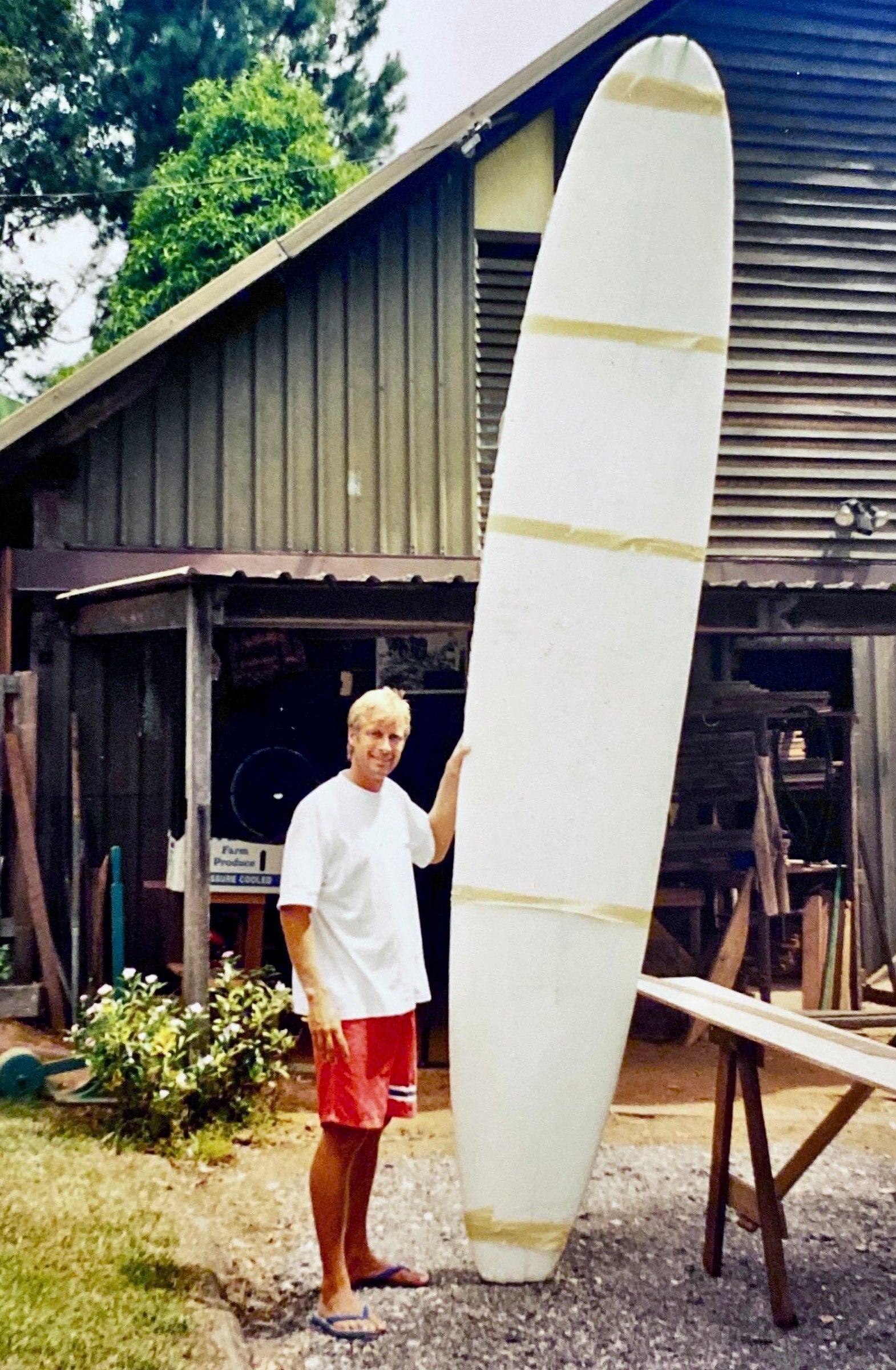
In 2004 I asked Wallace to make a toothpick for me. Wallace lived nearby and I watched him construct my board. He was 77 years old at the time. He worked with remarkable speed and precision. The board was 16 feet long, 22 inches wide and 4 ½ inches thick. I loved this board! It is my favourite board of all time and this was a memorable time for me. RIP Bill Wallace. (In this picture I am trimming on a 20 foot Bill Wallace Toothpick).
The Frame Method
Ninety years after Tom Blake made his frame boards on Waikiki Beach this method is still the most popular method for making hollow boards. You need to have a very strong vision of the finished board you hope to make and then start making the internal pieces. The board maker has the same 3D vision as a sculptor.
In Australia the hollow wood board hit a zenith in 1956 when the shapers wanted to copy the California style balsa surfboards. The Californians came with the balsa boards made in the latest, new designs and instantly the Australian surfers wanted them. However, there was not enough balsa in Australia so the board builders like Bill Wallace made them by applying the same methods used to make the toothpicks. They made a frame and added the rails and then a plywood bottom and deck. These boards surfed good but within two years balsa wood made it to Australia and balsa boards were being made. Two years later, PU foam blanks were being produced. The hollow wood boards were too expensive to make and hard to maintain. They soon became obsolete.
Now the hollow wood surfboard is making a major comeback, all over the world.
When the internet became a place where surfboard builders could share information, around 2002, scattered surfers from across the world collectively re-birthed the craft of making hollow wood surfboards. Washington State-based shaper Paul Jensen was the first to share his skills and knowledge. He provided plans for making his boards and advised the budding board builders. He continued Tom Blake’s culture of sharing knowledge, skills and stoke.
Soon Grain Surfboards in Maine was producing hollow boards and selling kits for fellow home builders. In New Zealand Roy Stuart was selling plans and Roger Hall was making paulownia boards. In California Danny Hess created his own method for wood boards. In Japan, Nobby Wood Surfboards started and he was making beautiful paulownia boards and in the UK, James Otter was making beautiful boards. In Brisbane, Bywater was holding classes where surfers could make their own wooden surfboards. The hollow wood surfboard was gaining popularity and many surfers were enjoying making their own boards.
A second revolution in hollow wood boards came with computer shaping programs. The internal pieces can be designed in the program and cut by a laser. No longer does the artisan have to struggle with the mental gymnastics of designing and cutting the pieces of the internal structure. This is a big evolution! It has opened the door for production of hollow wood board builders like Bosiny Surfboards in Portugal. They are making unbelievable hollow wood boards, works of highly-functional art.
Hollow wood surfboards feel so good in the water. Words cannot do them justice. I am very happy that people are finding the joy of hollow wood boards again.
The Tom Wegener hollow Doughnut Method Surfboard
In 2001 to 2002 I developed a method that fit the boards I wanted to make. I wanted to make 9’6 plus noseriders and 12’ plus gliders. I made a table matching the bottom rocker of the board. I then made a sheet of paulownia 8mm thick, 23” wide and 9’6” to 16” long (depending on the length of the board). I then cut the rail pieces and glued them in place while the board was on the rocker table. The first rail was 10mm thick and 2 ½” wide and went all the way around the board, so this first piece looked like a ring or a doughnut, hence the name. I then glued ribs, stringers and a block for the fin while the board was still on the rocker jig. I then put the board on my router table and used the router to shape a rolled contour to the rails and internal structures. I then glued a 10mm thick sheet to the deck and shaped the board.
If the above did not make sense to you, do not worry. My method was not employed by my fellow board builders. However, I do want mention my boards because they were very popular world-wide for a decade. They were the first production-made hollow wood boards for forty years. They sparked the concept of the green surfboard which was very novel at the time. My contribution was bringing paulownia to the wider surfing world.
There is one story I have to share of wood surfboards. My apprentice Matt Williams and I, were visiting Donald Takayama at his factory in Oceanside, California in 2007. Donald was shaping a series of redwood boards. They had the bevels shaped along the rails and were not yet rounded, like a stop sign with a lot more than six sides. They were mesmerisingly beautiful in the rack. I asked Matt to count the bevels and he said “11 bevels.” He then asked Donald how the computer cut the wood. Donald turned with a face of horror. Donald explained very clearly that it was he who hand-shaped those bevels, not a computer!
There is a higher level of mastery when it comes to making surfboards from wood. It is infinitely harder to shape than foam. Your tools need to be sharp and the shaping is slow and demanding. It is difficult but very satisfying. There is no compromising.

Leave a comment
This site is protected by hCaptcha and the hCaptcha Privacy Policy and Terms of Service apply.