

Max Enjoyment: Surf Tips
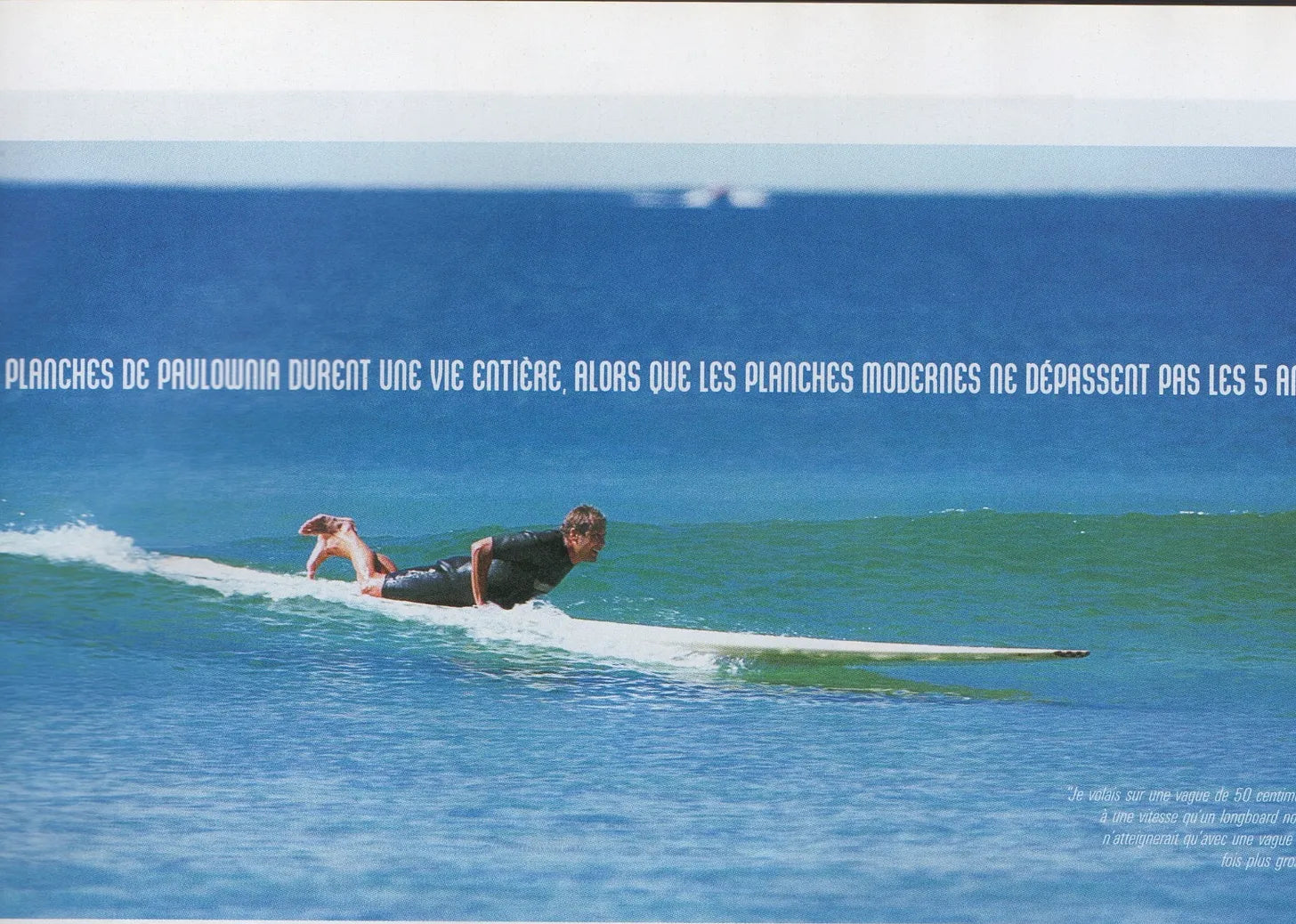
Catching Waves Early; why catch the wave early? When you catch a wave early you are going faster!
In the very early days of Tom Wegener Surfboards, Margie and I published an old-school newsletter; desk-top publishing, cut and copy, printed in black and white, stapled together and posted in envelopes with a stamp. Margie diligently collected and compiled a newsletter database of names, phone numbers and postal addresses. Later, some people even had an email address!
I recently re-read an article I published in a newsletter from Winter 2003 and I thought it was still worthy today. I feel like most of my writing is evergreen, or it’s historical, remaining relevant over time. Let’s see if you agree. I hope you enjoy it.
Catching Waves Early
I have been riding my new wood 12-foot Crusader. It is awesome. The difference between a short board and a longboard is comparable to the difference between a nine and twelve footer!
On the big board, I sit further out to sea than I normally do. Sitting out there I have experienced a new perspective on how waves break. A wave breaks when the front part of the swell slows down and the back part doesn’t, so it spills right over the top, creating the wave. As a swell comes into shallow water, it feels the bottom. The front of the swell feels the bottom first and slows down. The back part of the wave is still going fast and so piles up, creating a taller, steeper swell. The wave actually breaks when the front slows down so much, that the back of the wave goes over the front. It is like applying only the front brake on a bicycle when traveling as fast as an ocean swell. You and the rest of the bike will end up going over the handlebars.
Sitting way outside the lineup, I have observed how this works better than ever. I have noticed that my heavier traditional boards will easily catch a wave just so long as there is a hint that the front of the wave is slowing. Just for a moment there is a transformation from a swell to a cresting wave. With the traditional boards, this is the time to be stroking into the wave. The heavier, flatter board sinks into the wave and the back of the swell pushes the board forward. The wave is not steep so it is not about planing. It is about momentum and being streamlined. Momentum comes from steady, strong paddling strokes, not from fast strokes. The slowest paddler I have ever seen is Joel Tudor. On his heavy traditional boards he can be into most waves with four slow-motion strokes.
Finding where to sit and and which waves to go for is not easy. Spending some time to really watch the waves form and watch others go for them can give a better indication of how you want to approach the lineup. The ultimate goal is to get into the wave as early as possible. Choose the size of the wave you want and then sit further out than normal and watch the swells as they start to feel the bottom. When you are looking at them from the normal takeoff area it is very hard to see how the wave is forming. You sort of have to watch them from the side (further out). After watching for a while, move in a little bit. Then when you see a wave that is the target size, start paddling for it very early with slow, long, steady strokes. If you feel you are in the wave take a couple more strokes, just to be sure. Don’t stand up too early. It is the back part of the swell that pushes the tail of the board forward and lets you onto the wave.
Why catch the wave early? When you catch a wave early you are going faster! The wave slows down dramatically as it nears the impact zone and nearly stops all together as it breaks. To get in early is to ride the wave as it is moving fastest. For me the takeoff is the most exciting part of the ride. The wave is biggest and most powerful at this point. I like to maximise the ride by zipping along the unbroken wave.


Leave a comment
This site is protected by hCaptcha and the hCaptcha Privacy Policy and Terms of Service apply.