

The Mental Tools - Lesson 3
Noseriding and Wave Energy - More on the Energy of a Wave
In Lesson 2 I talked about the different ways we can observe the energy of a wave and how dolphins and body surfers ride the energy inside the wave. There is one surfboard design which works best when engaging the energy within the wave, and it is the Noserider model.
One of the great mysteries of surfing is how a surfer can hang ten while the front two or three feet of the board is elevated above the face of the wave. The key is, the back two thirds of the board are engaging the energy in the wave.
Noseriders have round rails through the mid area and tail. The roundness of the rail pulls water over the deck of the board, or more accurately stated, the rails pull the board into the face of the wave. The bottom usually has a roll which also pulls the board into the wave. This is the same principle as the bottom of the spoon being pulled into the water from the faucet in Lesson 1. The board is not sliding down the face of the wave like a ‘planing hull’ or a modern shortboard. It is riding the wave as a ‘displacement hull’ which moves through the wave like a dolphin inside the wave or a sailboat.
The energy of the wave is pushing the volume of the back half of the board towards shore with substantial force. Remember thinking of pushing a beach ball through a breaking wave with a stick? You can imagine the force on the stick. Now imagine the stick is 9 feet long. You would feel a lot of push if you were holding the stick at the other end. This same pressure is what allows the surfer to hang ten on an elevated surfboard nose. The wave is pushing the tail towards shore, but the fin is holding the tail into the wave face. This squirts the board forward. As the board goes across the wave and speeds up, there is more suction from the curve of the rails and the roll of the bottom. The board accelerates.
The goal of a good Noserider is to hold itself as parallel to the wave face as possible. If the board is pointing towards shore, you only go at wave speed. Get a Noserider parallel with the wave, and the tail in the top half of the wave where there is the most energy, and you go fast.
To get more parallel with the wave, the nose is pulled in (narrower) than the back half of the board. The wide point of the board is toward the tail. This is key, because the mid part of the board with the thickest and most round rails is pulling into the wave, and the nose can be out of the water as the surfer rides across the wave. An amazing equilibrium forms when the properly made Noserider is in trim and the surfer is hanging ten. The surfer must be on the nose to counterbalance the forces within the wave pushing the tail towards shore and the fin holding it in the wave.
I call it; Suction + Tension = Hang Ten (you can read the full article here)
Getting the curves right for a Noserider is a balance between making the rails too round and the board pulling itself into the wave too much. This slows the board and the drag limits the speed and equilibrium. Some noseriders have wide noses. These work with the same principles, but the surfer never gets to feel the lift from being on a nose elevated off the face of the wave. The do not find the real Noserider equilibrium.
There is one eternal drawback to the Noserider design, they have a hull speed or a speed limit. Surfers find this in waves beyond the noseriding realm, which is around head high surf. The board will slow down before you can do a bottom turn in the flats and will pull you back when trying to do a carving turn. The board is made for the small wave trim. I am seeing shapers negotiate the limitations of suction by carefully crafting boards that will give great noserides and push the hull speed up.
One caveat, some Noseriders have more roll in the bottom and knifier rails. These can work very well, but they have a slower hull speed and excel best in good noseriding surf. The Woosley 399 in Australia and the Hansen Goldstar Model by Mike Doyle in California are examples of these Noseriders, and I have experienced the drag of the roll through the bottom in waves when riding them in overhead beach break surf. That’s the thing about surfboards, there is not one all round design that does everything!
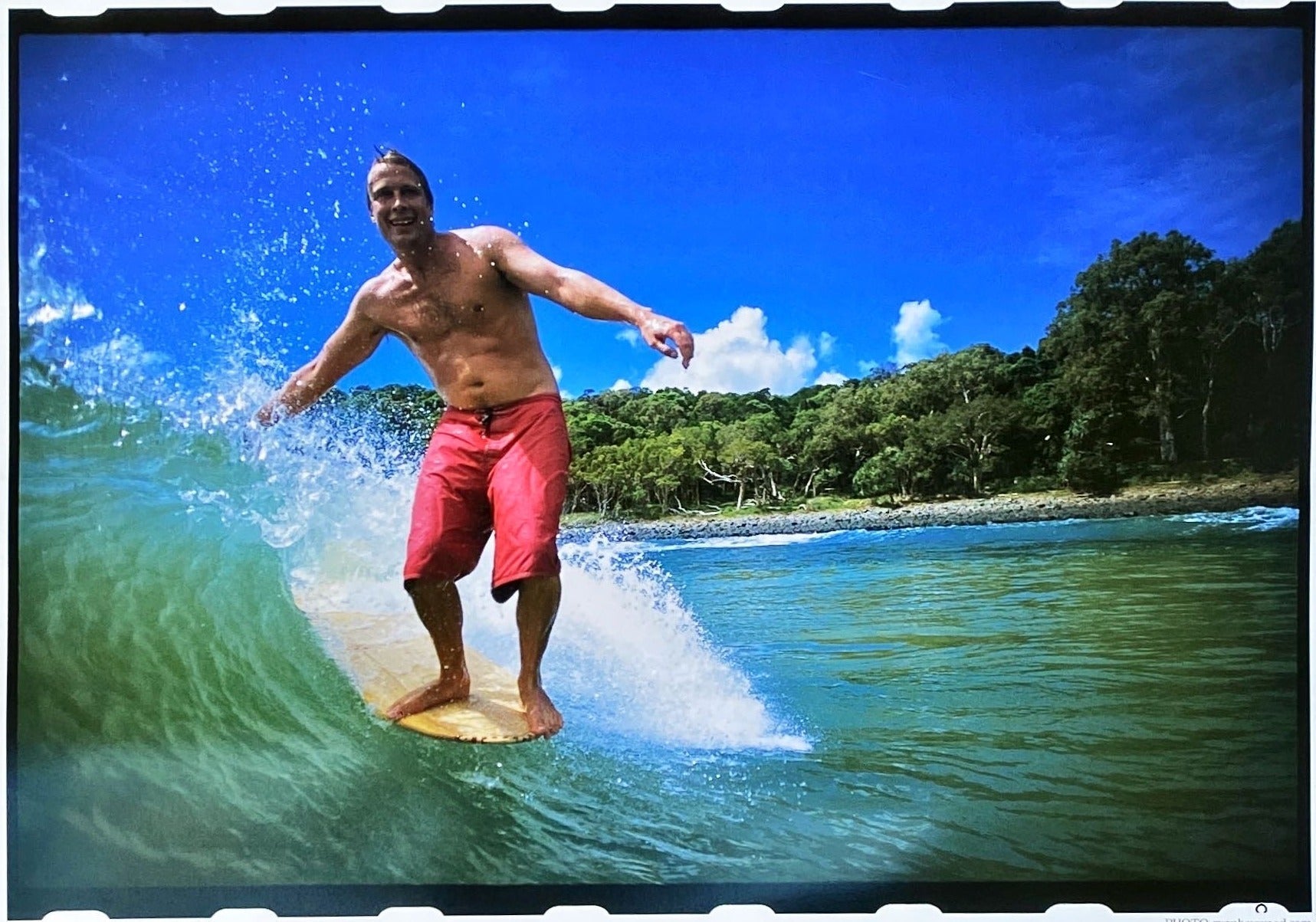
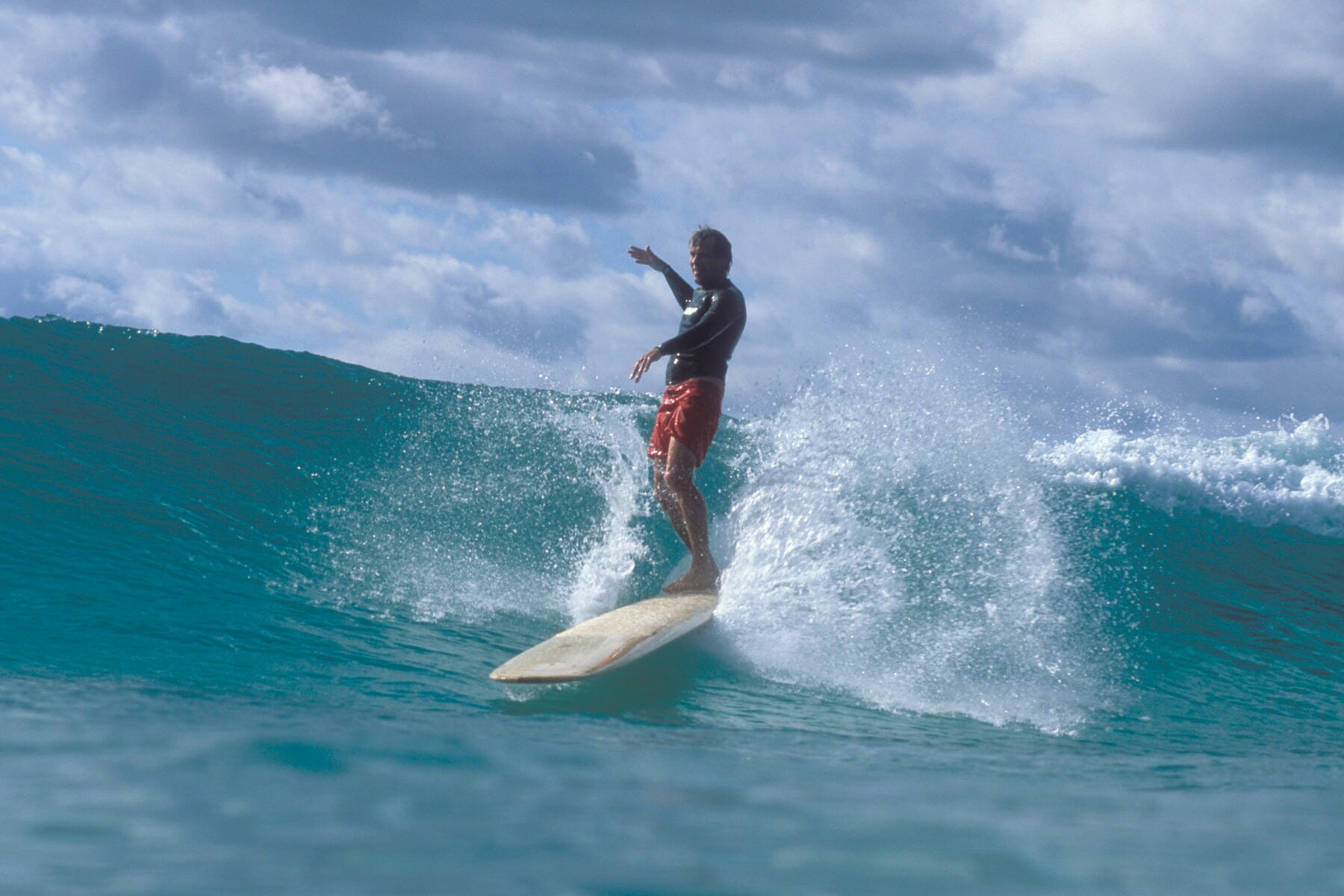
When you see images of noseriding, watch how the inside rail reacts with the wave face. Watch how the nose has neutral rails which do not pull water onto the deck nor lift out of the water. You can see that in the great shot of me on the nose, taken by the legend Ryan Heywood.

Leave a comment
This site is protected by hCaptcha and the hCaptcha Privacy Policy and Terms of Service apply.