

The Paulownia Sheets Method
We've added a new Signature Model to our family quiver
When I first came to Noosa in 1998 I was often ridiculed for my surfboards. At that time there were very few traditional, single-fin longboards being made and they were not popular. The weight of my boards, the size of the fin and the intricate woodwork in nose and tail blocks was out of step with the norm, which was essentially high-performance style longboarding.
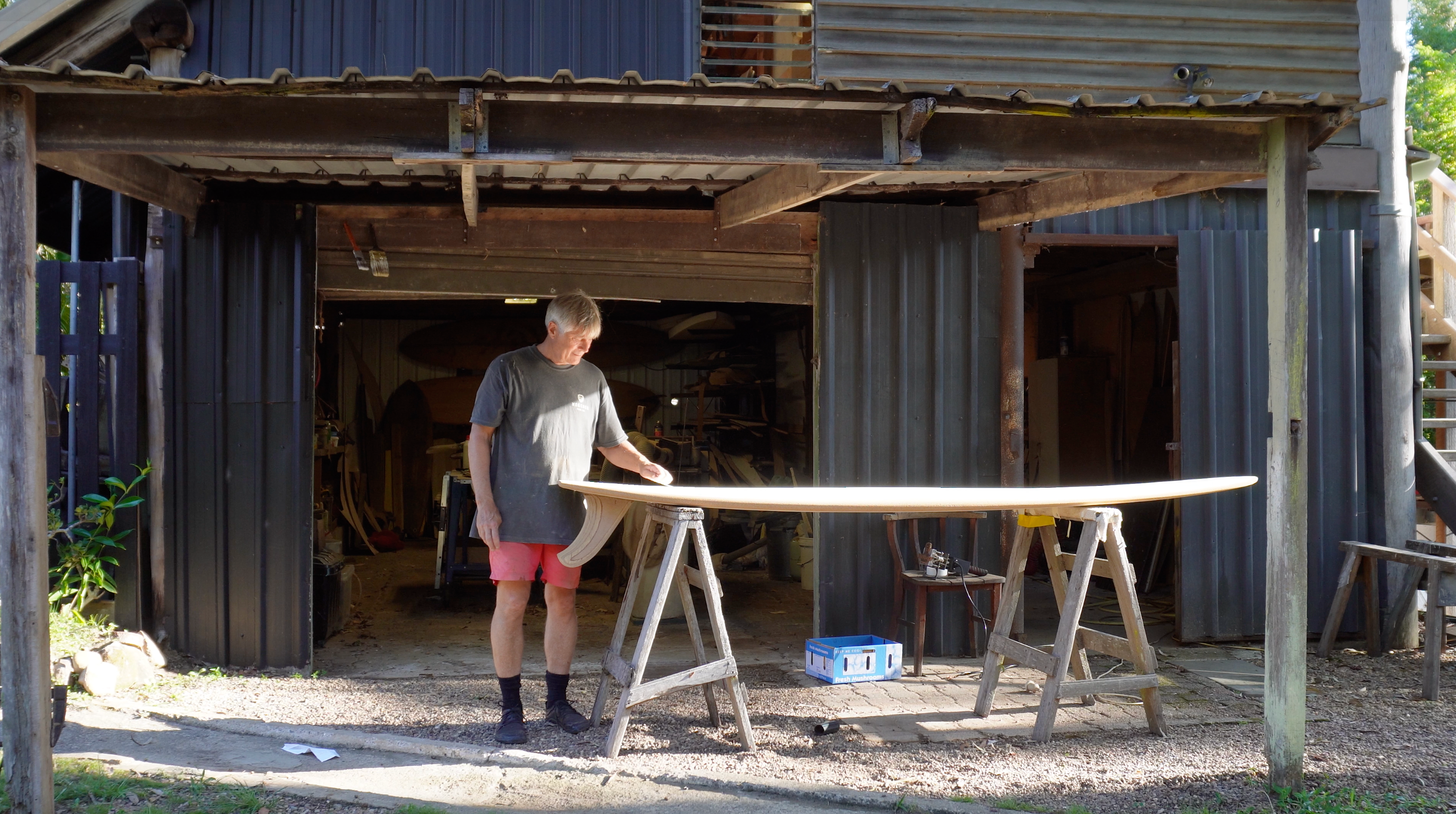
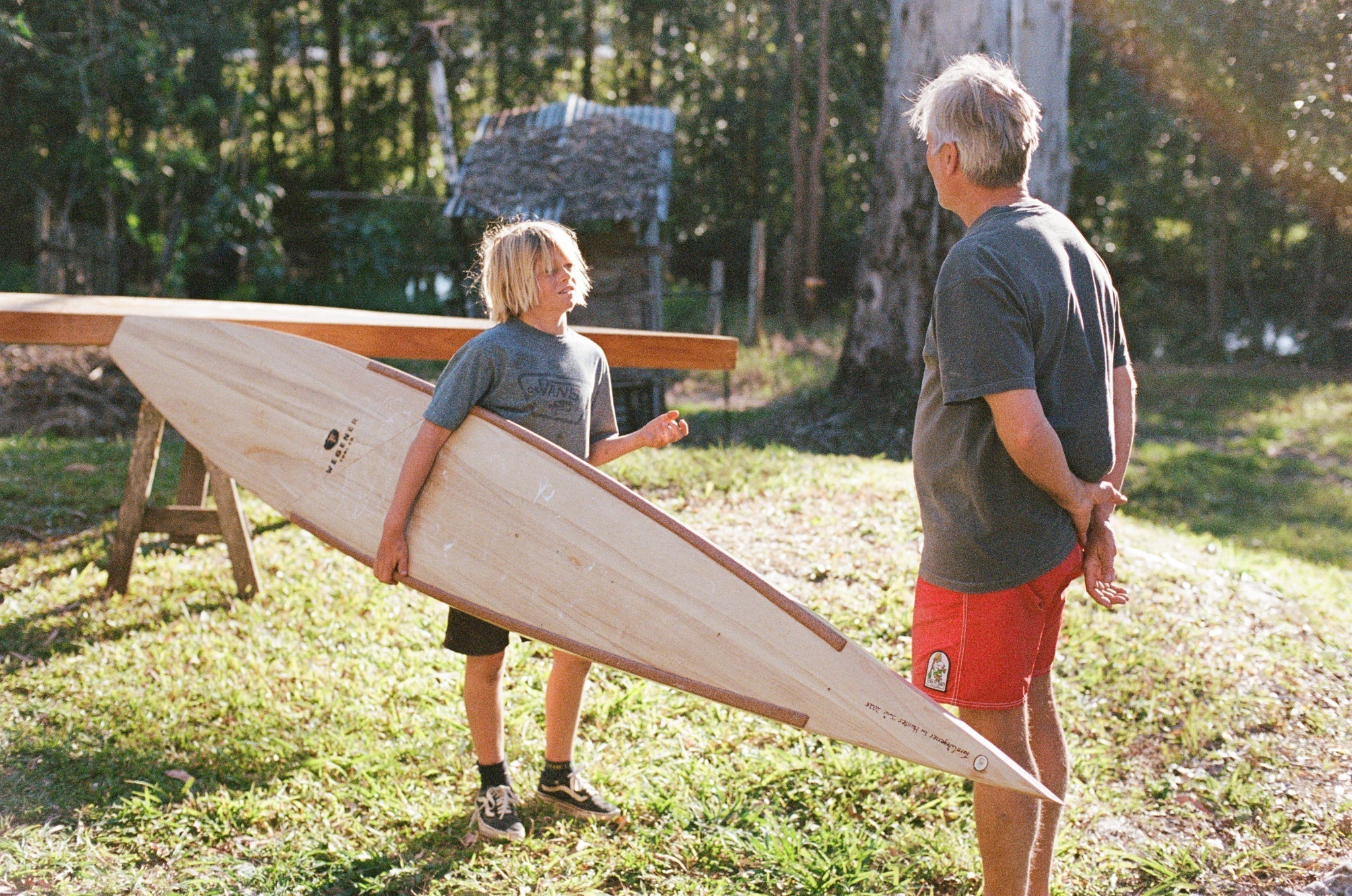
In 1999 Margie and I wrote and self-published the Wegener Surfboard Guide on a desktop computer, and in an attempt to explain my boards I wrote the piece below about my Signature Model. I revisited this article recently when Sunday and I made a new Signature Model for the family, using the Paulownia Sheets Method*. As we made the board Sunday and I discussed our history with my signature shape.
Three years after the original article (in 2002 the same year Sunday was born), we started making hollow paulownia wood Signature Models. We made several hundred of these and they surfed very well. We had developed a strong export market for these boards, however as the global financial crisis gripped the world, demand for our expensive, hand made surfboards dried up.
In response we evolved in many ways, including towards the paulownia sheets method of producing surfboards. The dynamics of the Signature Model have remained as the article explains, however the shape changes slightly with the different construction materials. Today we ride all three versions of the Signature Model; we have a board in the original foam & fibreglass, the hollow paulownia wood version and the new paulownia sheets method and they are all amazing in their own way. Here’s the story;
Signature Model (from the Wegener Surfboard Guide 1999)
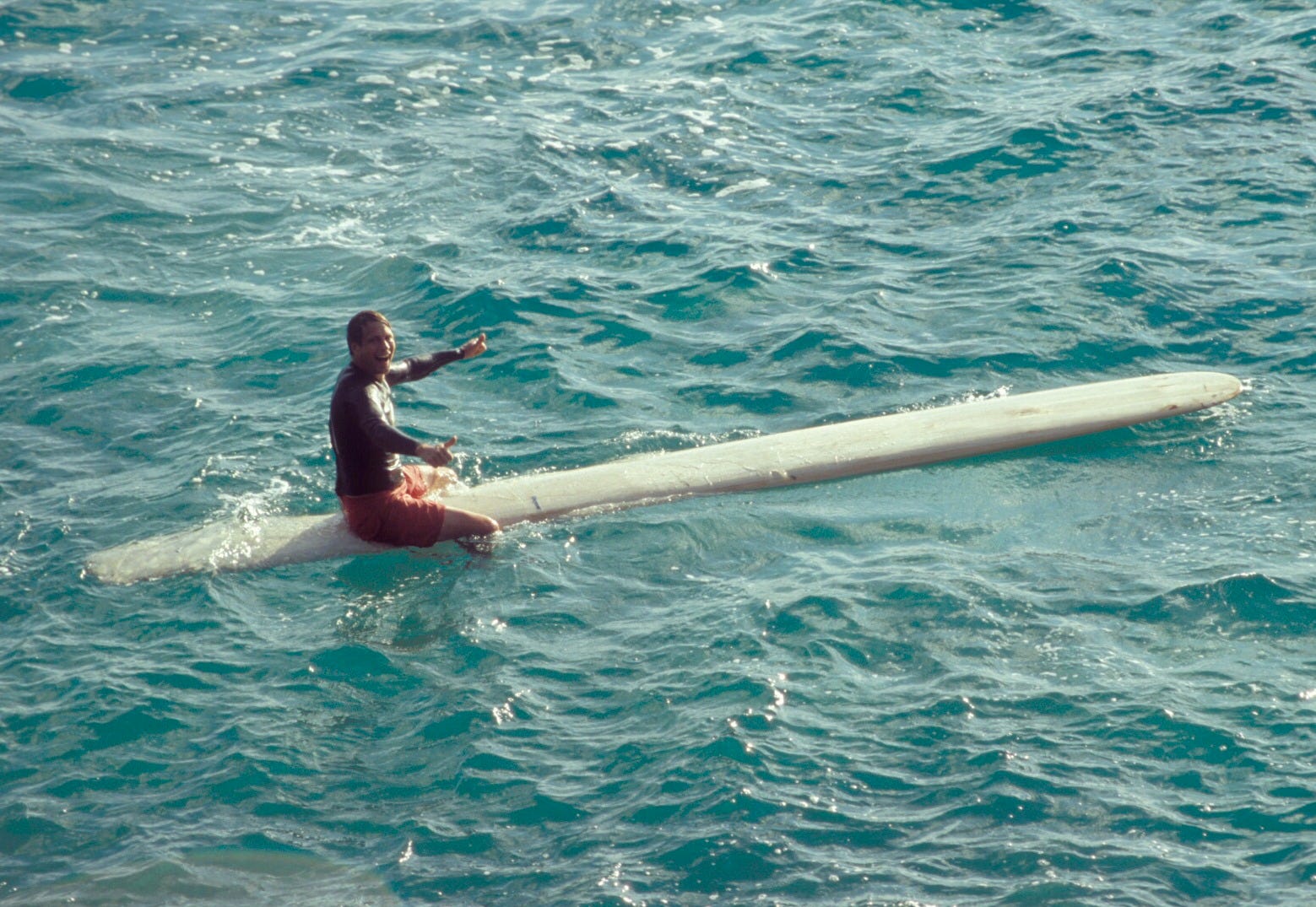
The Suction Plus Tension article is the prelude to the Signature Model. It is by far the best small wave longboard I have ever ridden. As the board finds perfect trim and the rider is hanging ten, the board accelerates and the surfer is off for a noseride never before possible. It also pivot turns perfectly. The board will whip around with the slightest pressure under one toe, but will keep its momentum. It drives through sections and flat spots and makes small wave riding an exhilarating experience. However in bigger, three metre and up surf, the Signature Model is out of its element. The soft rails and rocker in the tail, which give the board glide and speed in small waves, will actually create drag in bigger waves.
The Signature Model is an advanced board and it is made for surfers that can fluently cross step up and down the board. The surfer must be mentally ready to surf far enough back in the pocket for the board to come alive. This model performs in the steepest pockets and requires pivot turns out on the shoulder and behind the whitewash to keep it in the powerful part of the wave. In this way it is a technical board.
With the Signature Model I truly look forward to those smaller offshore days because the surf is usually very uncrowded and I can freely concentrate on moves outside of the scope of what has become popular surfing. I love going for the full arch, pivot bottom turn, the perfect form quasi-modo through the impossibly long section, and the hang ten cover up in the shorey. Other moves include the switch foot cutback (this is one of the most important traditional surfing moves), the el toro, and the fire hydrant for when you want to show off. The Signature Model comes alive in these conditions, and the harder you push the board, the more freedom the board will give you.
Instructional Videos & DIY Kits
Our vision at Wegener Tool Co. is to provide all of the materials and know-how to have you making your own boards, like the Signature Model, or a simple Surfie bellyboard, in no time at all.
*Paulownia Sheets Method is how I will refer to the board building technique that I mostly use now and that I am advocating for making surfboards because you have the freedom to make whatever you want, in a non-toxic environment. It involves gluing 2 mm sheets of paulownia wood sheets over shaped EPS blanks (I formerly called this the Corky Method).
For more watch the video Shaping the Signature Model here
Photo by Sunday Wegener

Leave a comment
This site is protected by hCaptcha and the hCaptcha Privacy Policy and Terms of Service apply.