

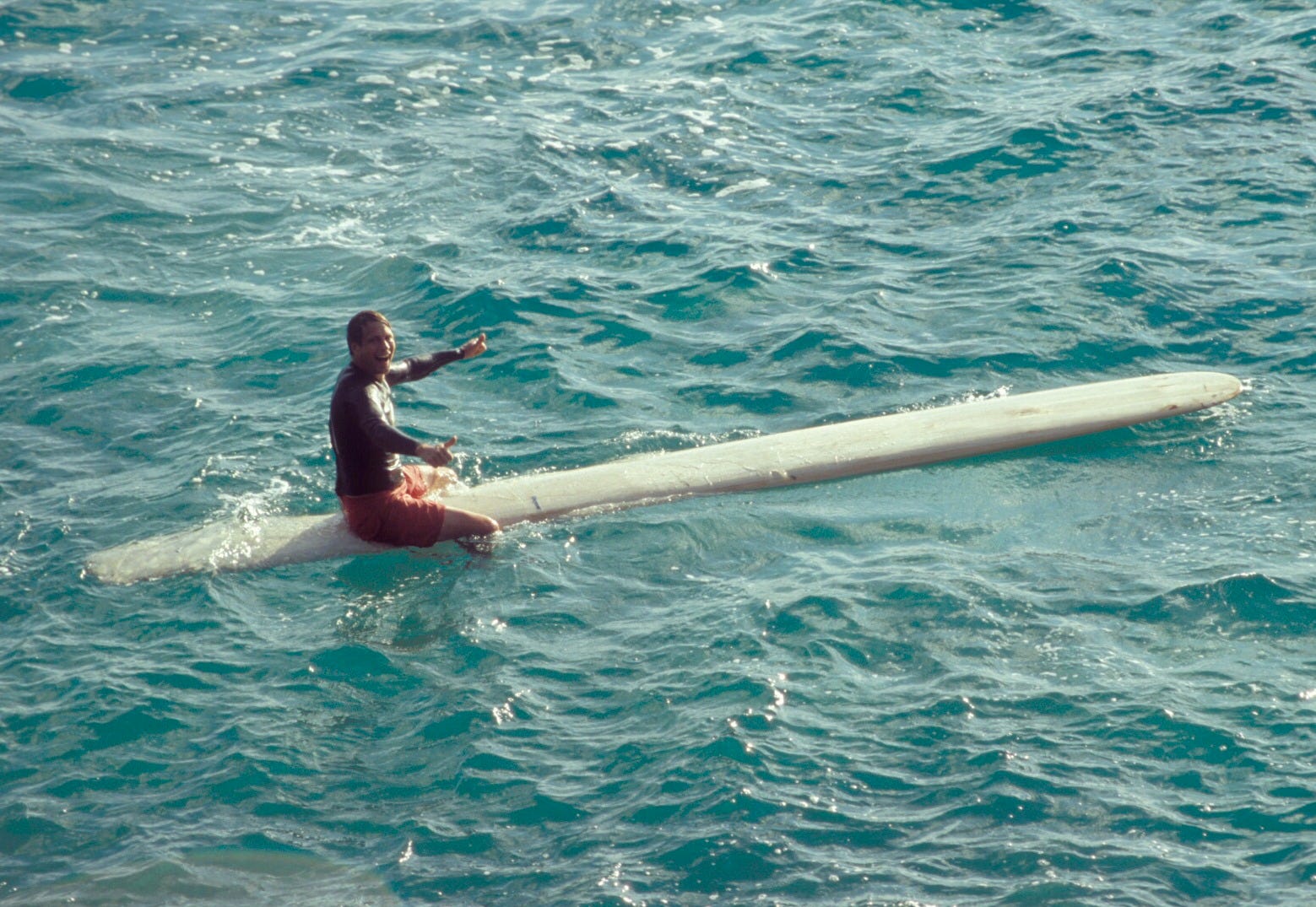
If you can imagine it, you can make it!
Make any surfboard design you desire. What experimentation taught me and how it's never been easier. You can make your own surfboard, safely at home, with this method.
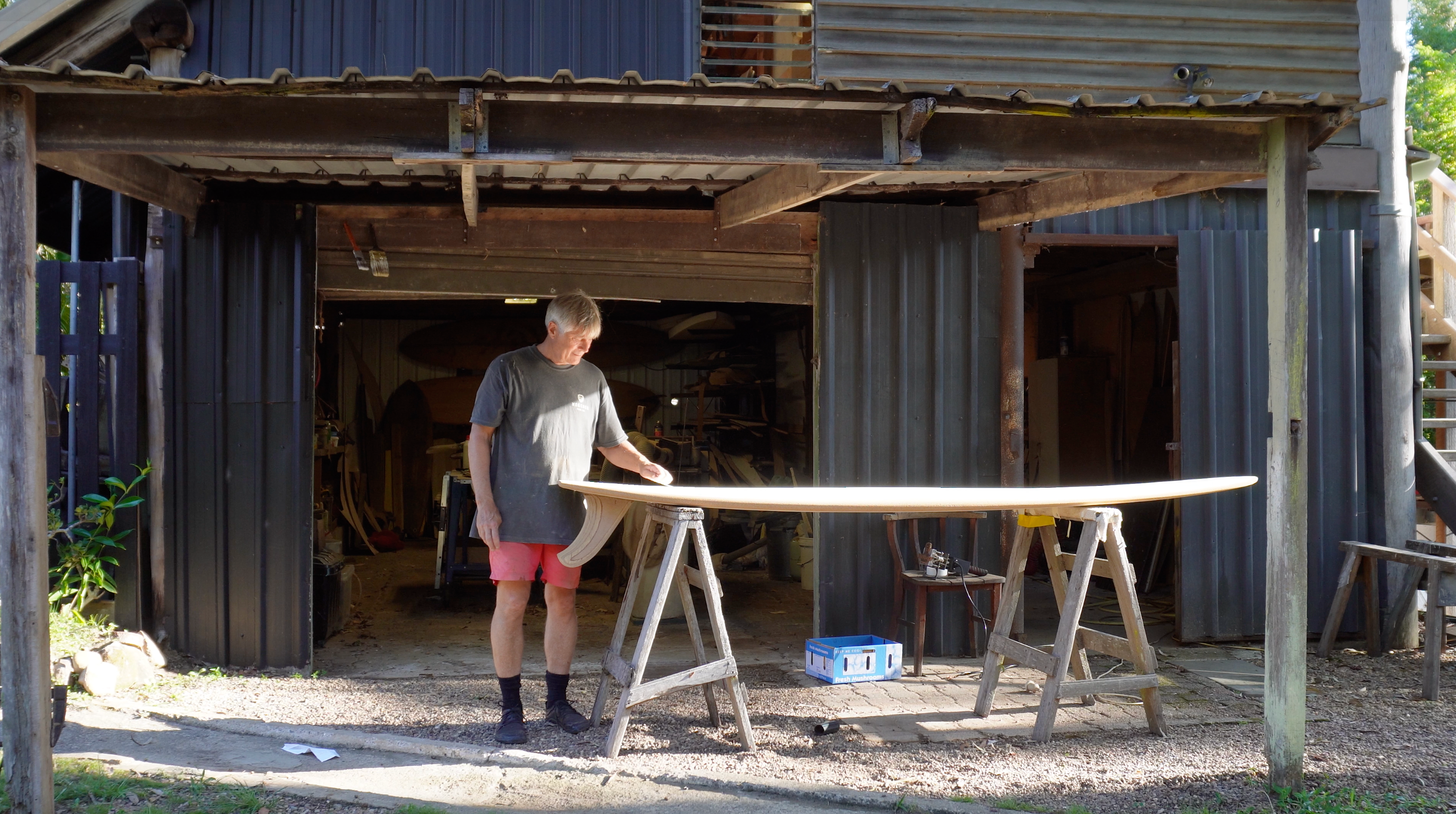
As Margie, Sunday and I create Wegener Tool Co. (a reimagining of Tom Wegener Surfboards), I have been busy making all kinds of surfboards from paulownia wood sheets, and realising the freedom and opportunities this method offers. In the morning I can envision any board from a hand plane to a 16 foot Olo and by the same afternoon, I could be half way finished. This is a creative freedom which boggles my mind, and these opportunities can be best seen when looking at the long boards.
Twenty-two years ago, I embarked on my 16 Foot Project. I made seventeen surfboards between 14 foot and 18 feet. I wanted to find the ultimate glide. I was young and fit, and had an enormous supply of paulownia timber.
Where did I get the wood? In 2004 there were quite a few paulownia plantations with mature trees, but no properly developed market for the wood. These plantation owners would provide wood to me on the condition that I would promote it and help them develop a market. It was a unique opportunity and led the way to the development of the Alaia and other designs.
For the 16 Foot Project I had three designs to work from. First, the 16 foot toothpick, of which I already owned a Bill Wallace custom toothpick. It has square rails and slight roll through the bottom.
Second was the Olo. Margie and I went to Waikiki in April 2004 to ride our wood boards in the same waves the Duke and Tom Blake had enjoyed. I went to the Bishop Museum specifically to see and template the ancient Olo boards surfed by Chief Paki in the 1800s. The Olo is a 16 foot board, with a flat rocker, and a very rounded bottom and deck. They are 19” wide and 6” thick while the rail comes to a fine edge. I made a replica of this board for my 40th birthday, 2005. It was very heavy, like the ancient boards, and took two people to carry it to the water.
The third designs were 14’ and 16’ versions of my 12’ Sunday Model and my Model A. They had large fins and more tail rocker so they would turn in small waves.
What struck me about these three boards, the toothpick, the olo and the finned hollow longer boards, was how different they were from each other. They had very different principles in the shapes yet they all surfed well. The toothpick is the easiest to ride and handle. It is light at about 15 kilos and glides like a dream across small soft waves.
The Olo is not easy to ride or handle. For example, it is so heavy that you have to see the wave you want and start paddling for it before the wave in front gets to you. It is like you are paddling for one wave but you are really paddling for the wave behind it. However, my successful rides on the Olo have been my peak surfing experiences. On the Olo you are one with the ocean. I would like to make a lighter version of this design to see if I can get the same experience without the toil.
The large finned boards are great for connecting sections, making for long rides. They need a lot of space in the lineup (they need to be surfed in isolation) because you can see the wave building way down the line and a moment later you are driving across it. The down side is they are clumsy when spinning them around to catch a wave. You have to slide back to the tail of the board to turn the board towards shore and then crawl up the board to paddle on to the wave! I found this issue grew exponentially with each foot added to the length of the board. Fourteen foot is about as long as a finned board can be and still feel like a surfboard. In comparison, the finless boards are easy to spin around when a wave is coming.
I was very fortunate to have the opportunity to make these boards. I had the wood supply, a big shed, the tools and customers who would buy them and share the journey with me. I could not make these boards again in the way I made them twenty years ago. The wood is very expensive and I am not strong enough to physically move them around. It is hard work. However, I could make them with the paulownia sheets method.
It really is possible to make any board you can imagine. Wegener Tool Co. can supply the paulownia sheets and instructions. Getting the EPS foam for the shape is not difficult, and the vacuum bag materials and vacuum pump set-up are easily sourced. Learning these shapes and understanding the fantastic surfboards of the past is fun for any board maker and an essential exercise for the next generation of great shapers.
I enjoyed making the big boards and learning the dynamics of each of the three designs. The process taught me so much. When making the Olo, I felt transported to ancient Hawaii and saw myself with the wood-crafting, artisan Kahunas, shaping the perfect curves for riding big, deep water waves.
When making the toothpicks, I am with Tom Blake and Bill Wallace creating a new type of surfboard and searching for small wave glide. When shaping the long finned boards, I remember watching Skip Frye trim with masterful style across the reefs of the Sunset Cliffs, San Diego.
If you can imagine it, you can make it with the paulownia wood sheets method.
Templates and instructional videos coming soon.
For more, watch the video Shaping the Signature Model here

Leave a comment
This site is protected by hCaptcha and the hCaptcha Privacy Policy and Terms of Service apply.